Does My Child Need a Palatal Expander? Signs Parents Should Know
When your child is growing, their teeth and jaws are changing constantly. Sometimes, the upper jaw does not develop wide enough to accommodate the permanent teeth or create a properly aligned bite. In these situations, an orthodontist may recommend a palatal expander.
For many parents, hearing that their child may need an expander brings up plenty of questions. Is an expander really necessary? What does it do? Is it painful? Will my child still need braces afterward?
A palatal expander can be an important part of early orthodontic treatment, but it isn’t appropriate for every child. Understanding what it does and recognizing some of the signs that may indicate a problem can help you determine when it’s worth having your child’s smile evaluated.
What Is a Palatal Expander?
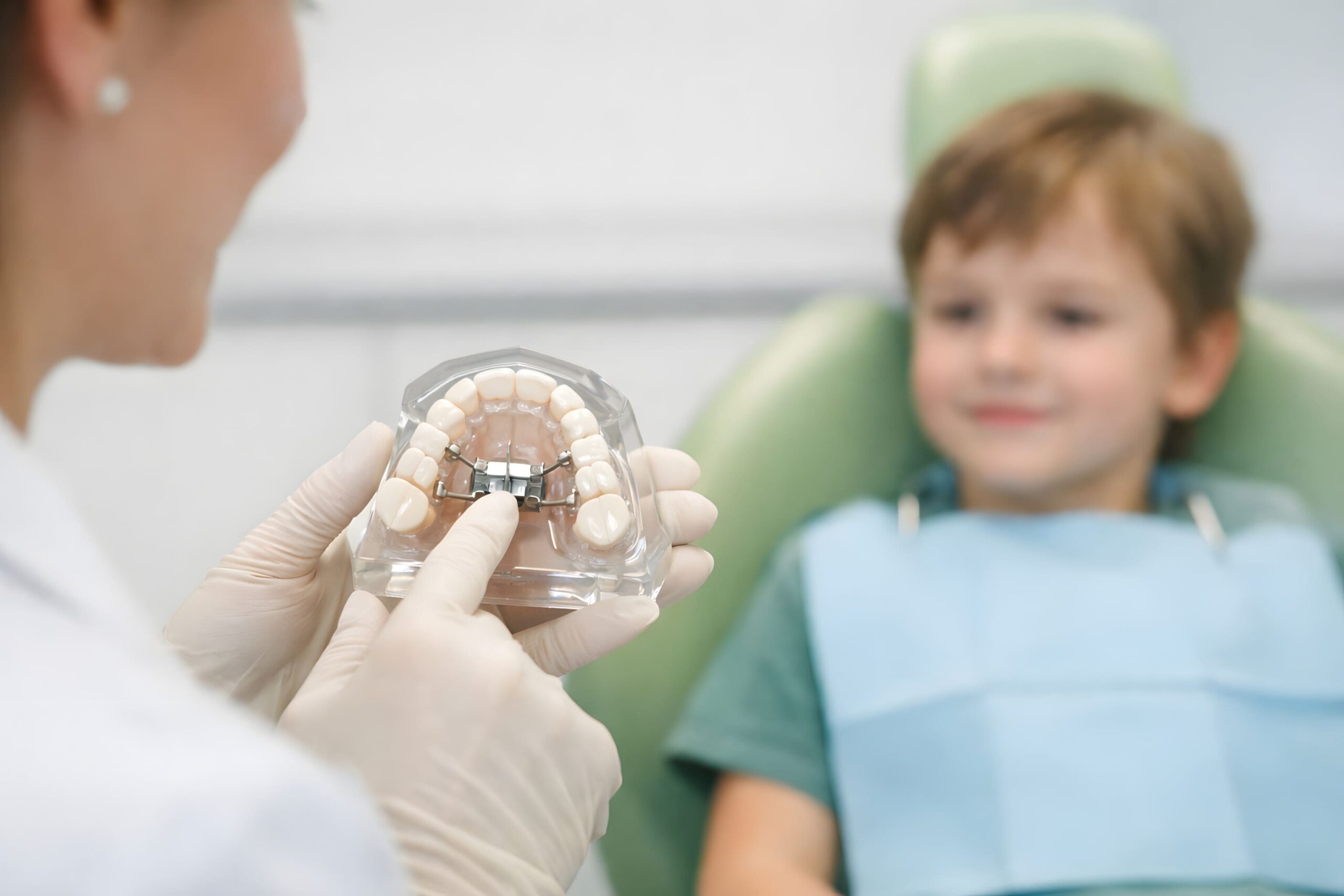
A palatal expander is an orthodontic appliance designed to gradually widen the upper jaw. It typically sits along the roof of the mouth and is connected to some of the upper teeth.
The purpose is to create a wider upper dental arch and improve the way the upper and lower jaws fit together. This can provide additional room for developing permanent teeth and help correct certain bite problems.
Unlike braces, which primarily move individual teeth, a palatal expander addresses the width of the upper jaw. This distinction is important because some orthodontic problems are caused not just by where the teeth are positioned, but by the relationship between the upper and lower jaws.
Palatal expanders are most commonly used in growing children because the upper jaw is still developing. The earlier an orthodontist identifies certain jaw-width problems, the more opportunities there may be to address them as part of a child’s development.
Why Would a Child Need a Palatal Expander?
A palatal expander may be recommended when the upper jaw is too narrow compared with the lower jaw. This can affect how your child’s teeth come together and how permanent teeth develop.
One of the most common concerns associated with a narrow upper jaw is a crossbite. A child with a crossbite may have some upper teeth positioned behind the lower teeth when they bite down. Rather than the upper teeth fitting naturally over the lower teeth, the relationship is reversed in certain areas.
A narrow upper jaw can also contribute to crowding. If the dental arch doesn’t provide enough space for permanent teeth, those teeth may erupt in less-than-ideal positions.
In some cases, expansion may also be considered when permanent teeth are having difficulty erupting because there isn’t enough room available.
The important thing to remember is that crowding or a crossbite doesn’t automatically mean your child needs a palatal expander. An orthodontist must determine what is causing the problem and whether expansion is the appropriate solution.
Signs Your Child May Need a Palatal Expander
Parents aren’t expected to diagnose orthodontic problems themselves. However, there are some things you can watch for that may indicate your child would benefit from an orthodontic evaluation.
A Crossbite Is Developing
A crossbite is one of the most common reasons a child may be evaluated for palatal expansion.
When your child bites down, look at how their upper and lower teeth meet. Do some of the upper teeth sit inside the lower teeth instead of outside them? If so, your child may have a crossbite.
Crossbites can involve just one tooth or several teeth. They can also occur toward the front or back of the mouth.
Because a crossbite can be related to the width of the upper jaw, an orthodontist can determine whether expansion may be appropriate.
Your Child Has Significant Crowding
It’s normal for children’s teeth to look a little crowded at different stages of development. However, significant or worsening crowding may indicate that there isn’t enough room for the permanent teeth.
You might notice teeth overlapping one another, permanent teeth erupting behind or in front of other teeth, or a tooth appearing to have very little room to come in.
Crowding has many possible causes, so it shouldn’t be assumed that an expander is necessary. An orthodontist can evaluate the size and shape of your child’s dental arches and determine whether the upper jaw is contributing to the problem.
Permanent Teeth Aren’t Coming In Normally
Parents often notice when a permanent tooth doesn’t appear when expected. Sometimes a tooth simply needs more time. In other cases, its eruption may be affected by a lack of space or the position of surrounding teeth.
If your child’s permanent teeth seem delayed, crowded or unusually positioned, an orthodontic evaluation can help determine what’s happening beneath the surface.
This is one reason early orthodontic evaluations can be valuable. An orthodontist can monitor developing teeth before a problem becomes more difficult to address.
Your Child’s Bite Looks Uneven
Take a look at your child’s bite when they naturally close their mouth. Do their teeth appear to fit together evenly? Does their jaw seem to shift when they bite? Do certain teeth appear to hit before others?
An unusual bite doesn’t necessarily mean your child needs an expander, but it can be a reason to have their bite evaluated.
Orthodontists look at much more than whether teeth are straight. They also evaluate how the upper and lower teeth fit together and how the jaws are developing.
Your Child’s Dentist Has Recommended an Orthodontic Evaluation
Your family dentist may be the first person to notice a developing orthodontic concern during a routine dental appointment.
They may see signs of crowding, an unusual bite, delayed eruption or other changes that warrant a closer look. A referral to an orthodontist doesn’t necessarily mean your child needs treatment right away.
In fact, an orthodontist may recommend monitoring your child’s growth rather than starting treatment immediately. The purpose of an evaluation is to understand what is happening and determine the appropriate timing.
Why Does the Timing of Expansion Matter?
One of the biggest questions parents ask is why their child needs to be evaluated while they’re still young.
Children’s jaws are still developing, which can make certain types of orthodontic treatment more effective during the growth years. If the upper jaw is too narrow, addressing the issue while your child is growing may be preferable to waiting until the jaws have fully developed.
This doesn’t mean every child needs early treatment. Some children benefit from immediate treatment, while others may simply need to be monitored.
That’s why the American Association of Orthodontists recommends that children have their first orthodontic checkup by age 7. The purpose isn’t necessarily to start braces at that age. Instead, an orthodontist can identify developing problems and determine whether treatment is needed now, later or not at all.
Does Getting an Expander Mean My Child Needs Braces?
Not necessarily.
A palatal expander and braces serve different purposes. An expander addresses the width of the upper jaw, while braces are designed primarily to move teeth into better positions.
Some children may use an expander as their only orthodontic appliance for a period of time. Others may eventually need braces or another type of orthodontic treatment after expansion.
For example, an orthodontist may recommend expansion first to address a narrow upper jaw and then monitor your child’s development as additional permanent teeth erupt. Comprehensive orthodontic treatment may be considered later if further alignment is needed.
The treatment plan depends on your child’s age, development, bite and individual orthodontic needs.
What Is It Like to Wear a Palatal Expander?
It’s understandable for parents to wonder whether an expander will be uncomfortable.
When an expander is first placed, your child may need some time to adjust to having something new in their mouth. They may notice pressure when the appliance is activated, and speaking or eating can feel different initially.
Most children gradually become accustomed to the appliance. Your orthodontist will provide specific instructions for caring for the expander and, if necessary, how to activate it at home.
Following those instructions is important. The expander works gradually, so consistent care and proper activation help keep treatment on track.
Your orthodontist will also schedule follow-up appointments to monitor how your child’s jaw is responding and determine whether the desired expansion is being achieved.
How Long Will My Child Need an Expander?
There isn’t a single timeline that applies to every child.
Treatment length depends on factors such as your child’s age, growth, the amount of expansion needed and the type of appliance being used. The active expansion process may be followed by a period of stabilization to allow the newly expanded area to become more stable.
Rather than focusing on a specific number of weeks or months, parents should think of expansion as a gradual process that is monitored by the orthodontist.
Regular appointments allow the orthodontic team to make adjustments and ensure your child’s treatment is progressing as planned.
What Happens at a Palatal Expander Consultation?
If your child may need a palatal expander, the first step is an orthodontic evaluation.
During the appointment, the orthodontist will examine your child’s teeth, bite and jaw development. They may also use photographs, X-rays or other diagnostic records to understand how the permanent teeth are developing and how the upper and lower jaws relate to one another.
From there, the orthodontist can determine whether your child actually needs expansion.
Sometimes the recommendation will be to begin treatment. In other cases, the best approach may be to monitor your child’s growth and revisit treatment at a later time.
That’s an important benefit of an early orthodontic evaluation for children: you don’t have to wait for a problem to become obvious before finding out what is happening.
Aloha Orthodontics Can Evaluate Your Child’s Developing Smile
If you’ve noticed a crossbite, significant crowding, an unusual bite or concerns about your child’s permanent teeth, an orthodontic evaluation can help you understand what’s happening and whether a palatal expander may be appropriate.
Aloha Orthodontics provides orthodontics for children in Las Vegas, helping families understand their children’s developing teeth and jaws and determine when treatment may be beneficial. With locations serving the Summerlin and Centennial neighborhoods, Aloha Orthodontics makes it convenient for Las Vegas families to get personalized orthodontic care close to home.
If you’re unsure whether your child needs an expander, braces or simply monitoring, you don’t have to figure it out on your own. Contact Aloha Orthodontics today to schedule your child’s evaluation and learn more about the right orthodontic treatment for their growing smile.